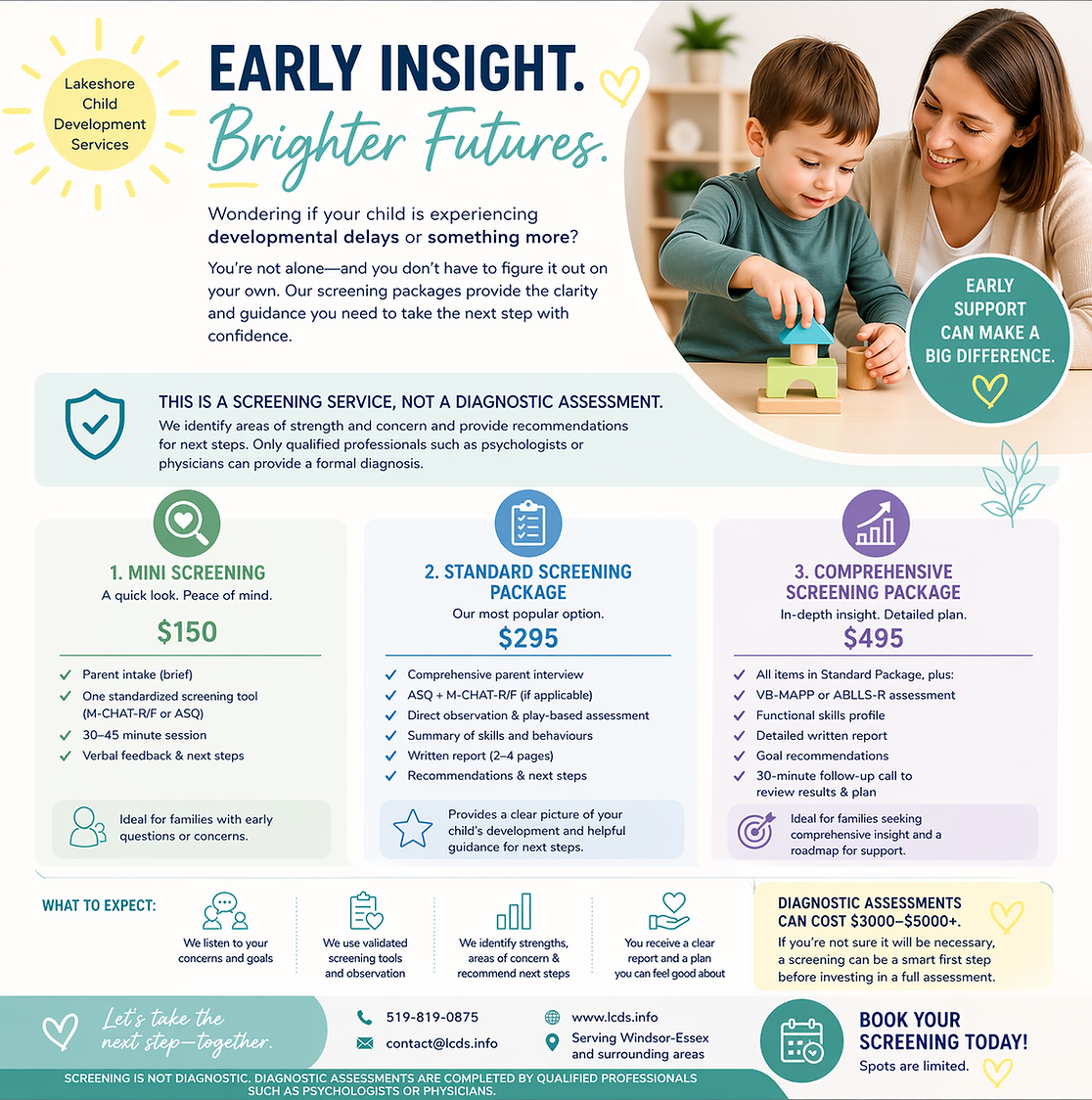
Signs Your Child May Benefit from Developmental or Autism Screening
As a parent or caregiver, you know your child best. You may notice small differences in how they communicate, play, or respond to the world around them. Sometimes these differences are simply part of your child’s unique personality—but other times, they may be early signs that your child could benefit from additional support.
If you’ve found yourself wondering “Is this typical?” or “Should I look into this further?”—you’re not alone. Autism screening can be a helpful first step in understanding your child’s development and determining whether further assessment or support may be beneficial.
What is Autism Screening?
Autism screening is a brief, non-diagnostic process designed to identify areas of strength and potential concern in your child’s development. It does not provide a diagnosis, but it can help guide your next steps with clarity and confidence.
Common Signs to Look For:
Every child develops at their own pace, but here are some signs that may indicate your child could benefit from a screening:
1. Differences in Communication
-
Limited use of words, gestures, or eye contact
-
Delayed speech or language development
-
Difficulty following simple directions
-
Repeating words or phrases (echolalia)
2. Social Interaction Challenges
-
Limited interest in playing with others
-
Prefers to play alone most of the time
-
Difficulty engaging in back-and-forth interactions
-
Reduced response to their name being called
3. Repetitive Behaviours or Strong Preferences
-
Repetitive movements (e.g., hand flapping, spinning)
-
Strong attachment to routines or difficulty with change
-
Intense interest in specific topics or objects
4. Sensory Sensitivities
-
Over- or under-reacting to sounds, textures, lights, or movement
-
Avoiding certain clothing, foods, or environments
-
Seeking out sensory input (e.g., spinning, crashing, touching everything)
5. Play and Developmental Differences
-
Limited pretend or imaginative play
-
Playing with toys in repetitive or unusual ways (e.g., lining up objects)
-
Delays in early milestones or daily living skills
When Should You Consider Screening?
You don’t need to wait for a formal referral or diagnosis to seek support. Screening may be helpful if:
-
You have ongoing concerns about your child’s development
-
Educators or caregivers have noticed differences
-
Your child is not meeting expected developmental milestones
-
You want reassurance or guidance on next steps
Why Start with Screening?
A full diagnostic assessment can be costly and often comes with long waitlists. Screening offers a more accessible, timely way to:
-
Get your questions answered early
-
Better understand your child’s strengths and needs
-
Receive guidance on whether further assessment is recommended
-
Access early strategies and supports
Early understanding can make a meaningful difference in how you support your child moving forward.
A Supportive First Step
It’s completely okay to feel unsure. Many families start with questions—not certainty. Seeking answers doesn’t mean something is “wrong”—it means you’re being proactive and responsive to your child’s needs.
At Lakeshore Child Development Services, we provide developmental and autism screening in a supportive, compassionate environment. We take the time to listen to your concerns, understand your child, and help guide you toward the next best step—whatever that may look like for your family.
Ready to Learn More?
If you’re wondering whether autism screening might be right for your child, we’re here to help. Reach out to book a screening or a free consultation—we’d be happy to connect and support you on your journey.